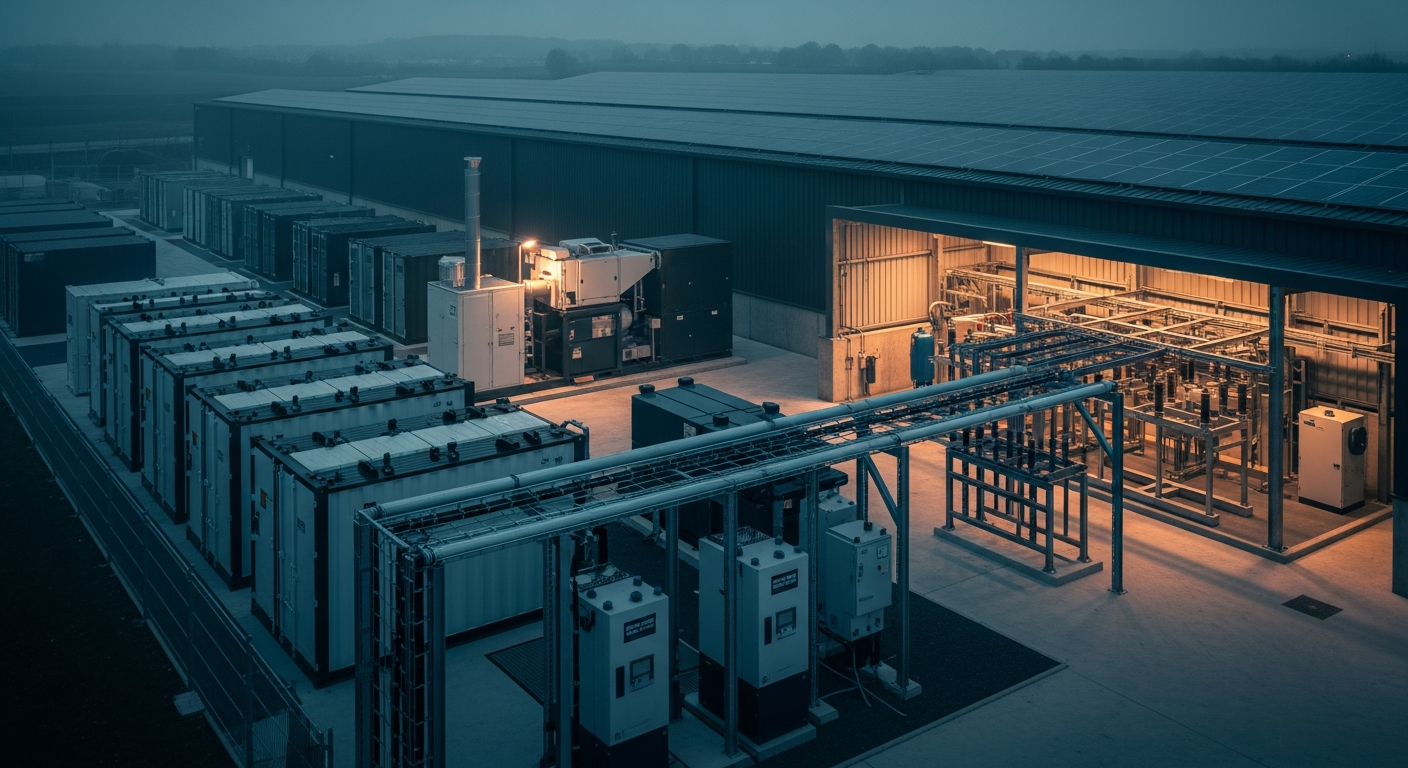
Hybrid Energy Hubs for High-Use Sites
On-site power systems that reduce grid reliance, cut capacity and standing charge exposure, and improve resilience — combining CHP, solar PV, battery storage, heat pumps and smart energy management.
Site assessments are free, no-obligation and cover the full technology mix for your site
Engineered for high-use sectors
The sites that benefit most share one thing: serious, sustained energy demand. We design around the realities of each sector.
The cost of standing still
is compounding
For high-use sites, on-site energy is a board-level finance and risk decision. These are the pressures stacking up on every imported unit and every reserved kilowatt.
Energy is now a board-level cost line
Delivered electricity remains well above pre-2021 levels, and the fixed elements of every bill — capacity, standing and network charges — keep climbing regardless of how much you consume. For high-use sites, that turns energy from an operating overhead into a strategic risk the board has to plan around.
- Volatile wholesale markets make long-term budgeting harder to defend
- Fixed charges hit sites with serious, sustained demand the hardest
- Doing nothing is itself a rising, compounding cost
Commercial pressure rating
Agreed capacity charges
Sites pay for reserved capacity whether or not they use it
Standing & network charges
Fixed daily charges climb regardless of consumption
Wholesale cost volatility
Market exposure makes multi-year energy budgets hard to defend
Resilience risk
Power quality events carry real cost for continuous operations
Grid connection constraints
Long lead times and limited capacity slow expansion
ESG & carbon obligations
ESOS, SECR and net-zero targets demand reportable action
EV & electrification load growth
Fleet electrification is adding a growing, unplanned demand layer
What is a hybrid energy hub?
Rather than relying on a single technology, a hybrid energy hub integrates on-site generation, storage and intelligent controls into one coordinated system. Each component is sized to your load profile, so the grid is topped up only when it is genuinely needed.
Inputs
Grid Import
Topped up only when needed
Solar PV
Daytime generation
CHP / CCHP
Power + recovered heat
Heat Pumps
Efficient heat & recovery
Integration & control
Micro-Substation
On-site distribution
Battery Storage
BESS — store & shift
EMS & Smart Controls
Optimises every flow
Outputs
Site Loads
Process, HVAC, EV, IT
Reporting Layer
Performance & ESG data
Technology-agnostic
We recommend the precise mix for your site — not a single product we want to sell.
Coordinated by controls
Smart controls orchestrate every flow, prioritising your cheapest, cleanest energy first.
Resilient by design
Storage and on-site generation keep critical operations running through grid disruption.
Operating model impact
We model the mechanism, not a magic number. Every figure is site-specific and clearly marked indicative, subject to formal feasibility.
High and growing — full import for every unit consumed
Reduced by on-site generation, sized to the load profile
Paid on full reserved load regardless of what is used
Designed to reduce the reserved demand presented to the grid
Fully exposed to wholesale and network charge volatility
Baseload partially insulated; business case modelled to the board
Single point of failure — full dependence on grid quality
Storage and on-site generation maintain critical loads through events
Grid-intensity carbon with limited reporting capability
Measurable reduction; outputs structured for ESOS and SECR
EV load growth adds unmanaged demand pressure
Smart EV charging integrated into the EMS — load-shifted and manageable
Five layers, one connected system
A hybrid hub is an architecture, not a shopping list. Energy is generated, stored, controlled, distributed and reported — each layer grouped by the role it plays in the operating model.
Generate
On-site power production
Produce electricity on-site using gas engines and photovoltaics, displacing grid imports from the first unit.
Store
Buffer & peak-shift
Store generated energy and shift it to peak tariff periods, reducing exposure to half-hourly settlement charges.
Decarbonise Heat
Low-carbon heat & recovery
Shift process and space heating from gas to low-carbon sources; CHP waste heat recovery raises overall system efficiency.
Control
Intelligent energy management
The orchestration layer: constantly reads tariff signals, asset states and site demand — then prioritises the cheapest, cleanest energy first.
Distribute
Site network & switchgear
On-site switchgear ties the hub safely into site distribution, providing the reliable infrastructure layer every other asset depends on.
Protect
Resilience & continuity
UPS and standby plant protect critical loads through grid events, planned outages and supply interruptions — keeping key processes running regardless of grid conditions.
Electrify Fleet
EV charging & demand management
Smart EV chargers add a schedulable demand layer, charged from on-site generation where available and managed to avoid peak settlement periods.
Report
Performance & ESG reporting
Board-ready reporting from day one — savings modelled and clearly marked indicative; carbon outputs aligned to ESOS, SECR and net-zero obligations.
Specialist
Bespoke & emerging technologies
Where site conditions suit it, Skyline can coordinate specialist technologies — commercial wind for eligible rural and coastal sites, always assessed on project economics.
The Specialist layer covers emerging and site-specific options including commercial wind for eligible rural and coastal sites — assessed on project economics, not offered as a default.
Board-ready reporting, from day one
Reporting is a genuine Skyline service — feasibility reports, savings modelling, carbon and ESG reporting, implementation tracking, board-ready PDFs and before/after comparisons that hold up to scrutiny.
- Feasibility-led — figures are modelled and clearly marked as indicative, subject to formal study
- Compliance-aware — outputs designed to support ESOS and SECR reporting obligations
- Commercially framed — payback and cost reduction set out in plain board terms
Feasibility & Performance Report
Example: Distribution Centre, Midlands
Recommended
CHP + Solar + BESS
Grid import
Lower
modelled reduction
Indicative payback
Mid-term
subject to feasibility
Savings model
Indicative — subject to formal feasibilityReduced
scope 1 & 2
ESOS / SECR
report-ready
On track
RAG: green
Implementation timeline
- Feasibility
- Design
- Install
- Commission
- Optimise
Recommendation
A hybrid hub combining CHP, rooftop solar and battery storage is modelled to materially reduce grid import and standing-charge exposure for this load profile, while improving resilience. Proceed to a formal feasibility study to confirm sizing, costs and returns.
Reporting can be supported through CrestIQ as a specialist reporting partner.
Start modelling your site in minutes
The same frameworks our engineers use — available online. Built to give a fast, indicative read before a formal feasibility study is commissioned.
Real work, delivered on site

Large Commercial Bakery
Challenge: constant thermal and electrical baseload for ovens, with rising gas and grid costs.
Outcome: an integrated CHP and rooftop solar design modelled to cut grid reliance and secure thermal baseload.
View Case StudyLogistics & Warehousing
Battery + Solar Integration
A hybrid solar and battery design for a 24/7 cold-storage facility, modelled to shift load away from peak tariff periods and reduce standing charge exposure.
Start your project
Begin with a site assessment
Every delivered system starts with a free feasibility study modelling your load profile, the right technology mix and an indicative business case.
Expert Guides
Concise, printable guides written by our engineers — free to download, no subscription required.
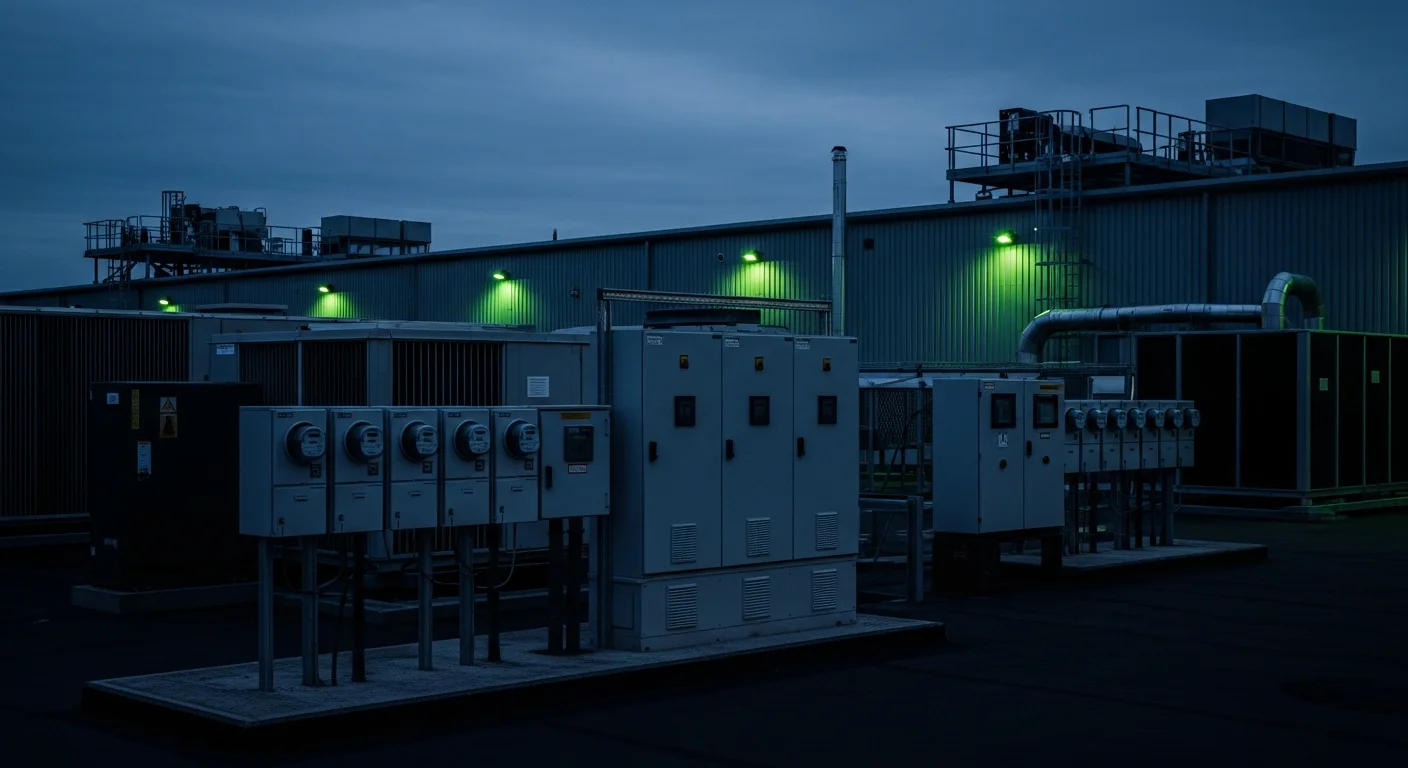
2026 Onsite Energy Compliance Guide
Everything UK commercial and industrial operators need to know about ESOS Phase 3, Part L Building Regulations amendments, SECR obligations, and practical compliance pathways. Includes a 90-day countdown action plan and technology comparison.
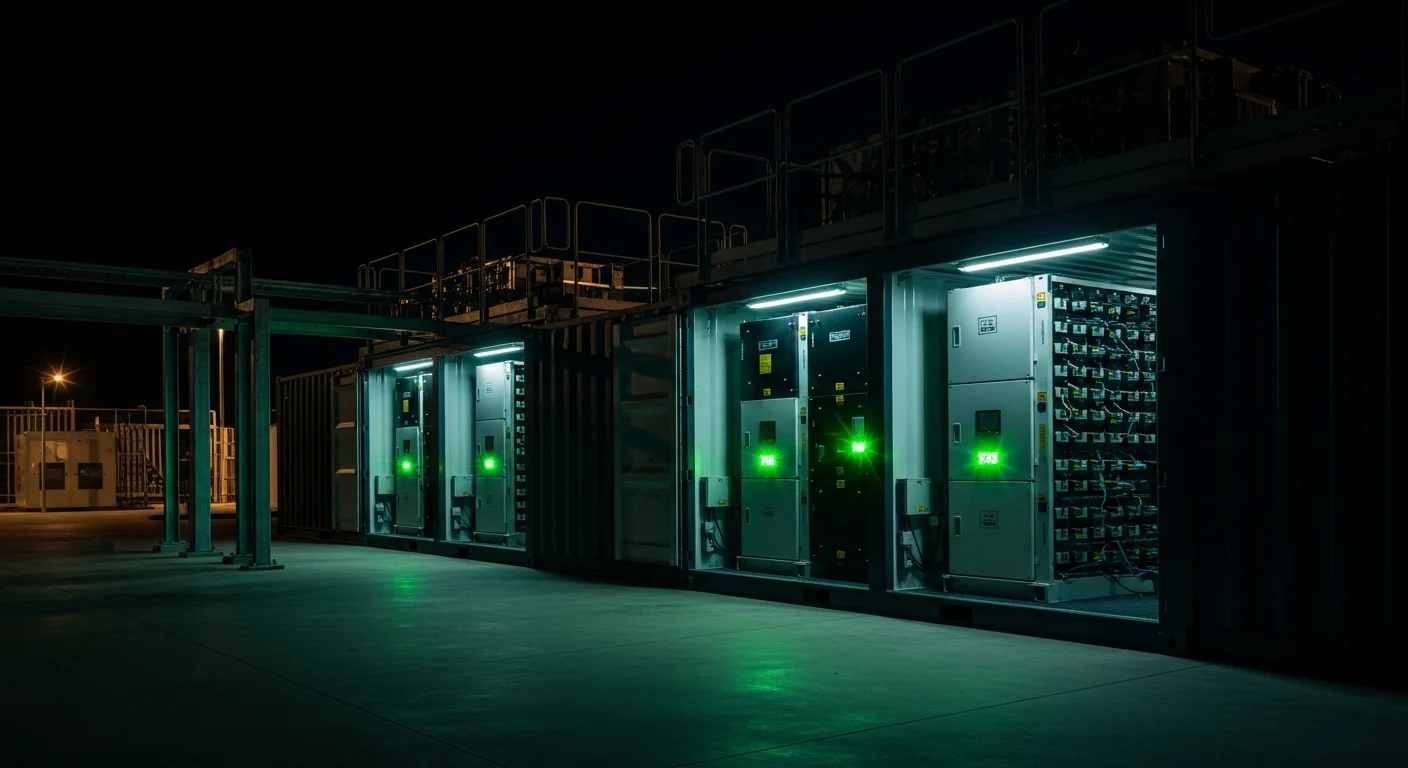
Battery Storage Sizing Handbook
A practical engineering guide for UK industrial and commercial sites: how to size, specify, and optimise BESS for maximum financial return. Covers energy arbitrage, demand response, grid services revenue stacking, and procurement specification.
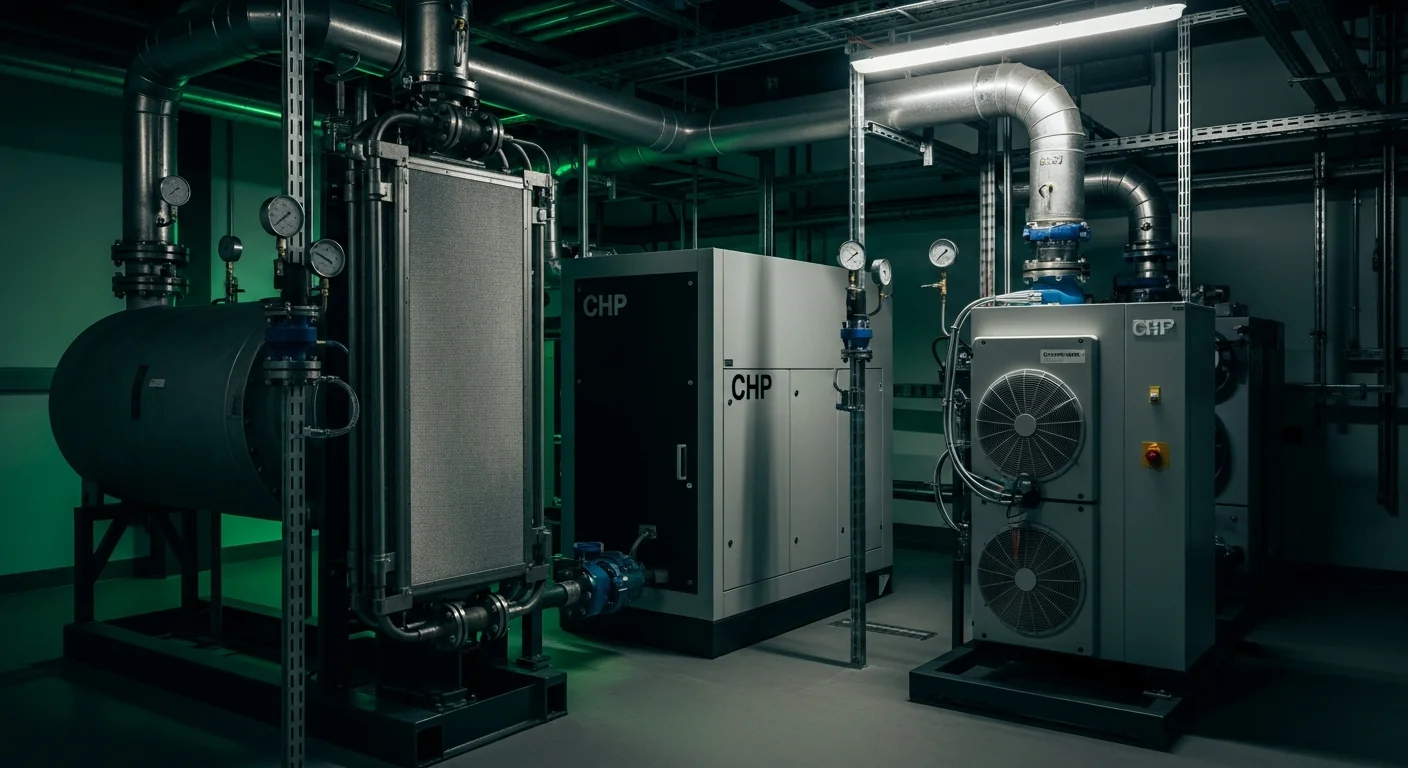
CCHP vs. Heat Pumps: The Decision Matrix
A structured guide for energy managers choosing between CCHP (trigeneration) and heat pump technology. Includes performance benchmarks from real UK installations, a site suitability scoring matrix, and a five-question decision framework.
Start with a site assessment. Leave with a practical energy route.
Book a free site assessment and we'll model the right hybrid energy hub for your site — generation, storage and controls sized to your load, with a clear, indicative business case you can take to the board.