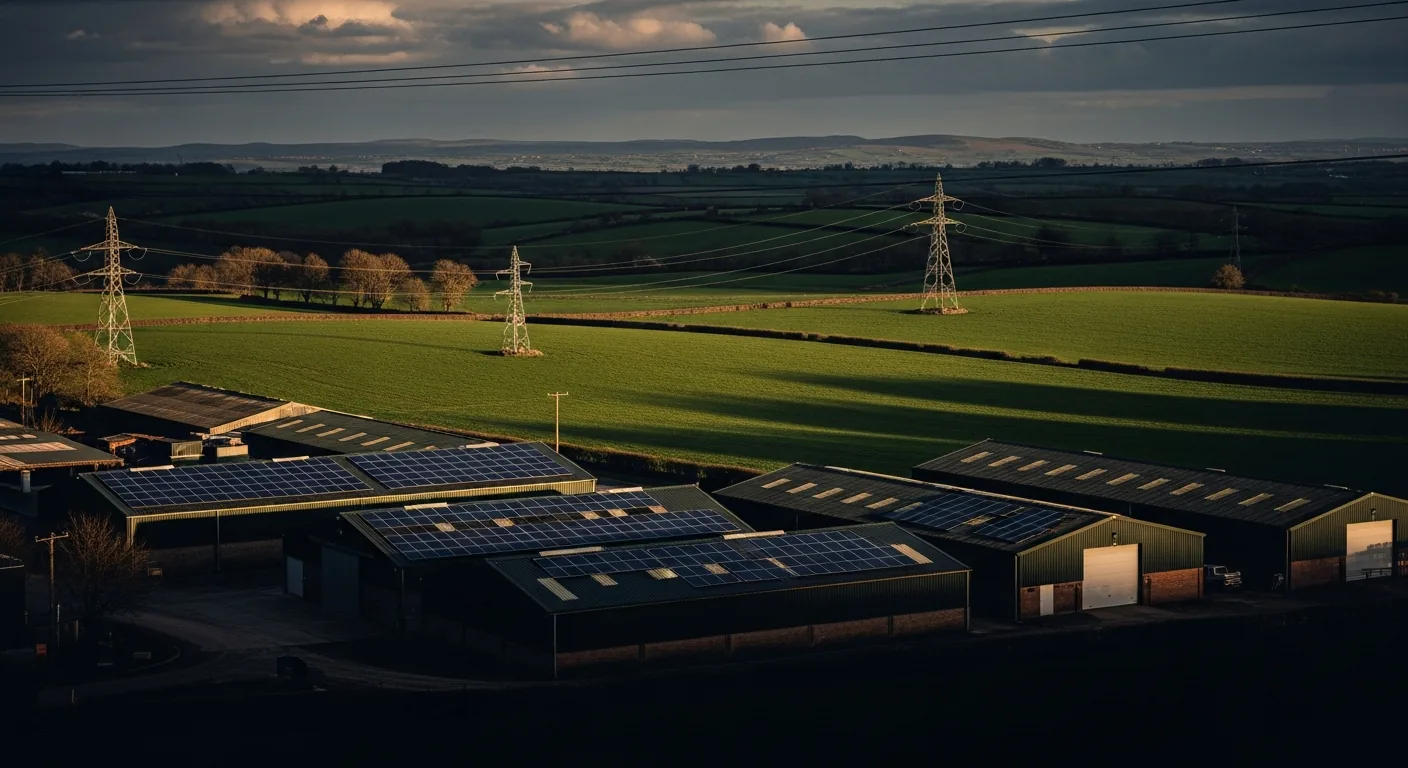
Onsite Energy for Farms & Rural Estates
Working farms and rural estates combine seasonal energy peaks with grid connections that were never designed for today's agricultural loads. We design generation, storage and capacity strategies that work with the land.
Generation in summer, demand at harvest
Solar peaks in midsummer while a farm's heaviest demand arrives with grain drying and harvest. Storage and the right grid capacity bridge that gap, putting cheap summer generation to work when the dryers run.
Working farms and rural estates carry an energy brief unlike most commercial sites: seasonal peaks from grain drying and irrigation, sustained heating and refrigeration loads, and all of this on grid connections designed decades ago for a fraction of today's demand.
The rural grid is often the single biggest constraint. Expansion — whether adding more plant, electrifying machinery or installing generation — can be blocked by an inadequate or fully-subscribed connection. In some cases the connection is so constrained that the site cannot accept solar export without a costly reinforcement.
We approach each holding from its consumption data and land assets. Agricultural roofs, south-facing slopes and areas of open land are often underused — and well-matched to onsite generation that reduces import, cuts bills and hedges against energy price volatility in ways that enhance the long-term value of the estate.
Seasonal profile
Harvest demand, midsummer sun
Strong agricultural loads, weak grid connections
Rural energy sites combine seasonal variability, grid constraints and diverse load types in ways most energy suppliers do not understand.
Seasonal demand peaks
Grain drying, irrigation and harvest operations create short, sharp peaks that dominate the annual energy bill — and often exceed the rated connection capacity.
Constrained rural connections
Many farm connections are circuits originally sized for a small farmhouse. Adding generation or electrification quickly hits the limit.
Diverse load types
Heating, refrigeration, machinery and EV charging create a mixed demand profile that no single technology addresses on its own.
Export constraints
Constrained connections often limit the size of export-connected solar arrays, reducing the return on any generation surplus.
Recommended technology stack
We combine generation, storage and, where necessary, capacity measures to match the site's load profile and land assets.
Solar PV
Agricultural buildings and open land often carry the best solar resource on the site — arrays sized to self-consumption avoid export limitations.
Explore serviceCommercial Wind
Open, exposed rural sites sometimes carry a strong enough wind resource to justify a small commercial turbine. We assess viability honestly, including planning and grid.
Explore serviceBattery Storage
Store solar and off-peak power for use during grain drying and peak tariff windows — and provide resilience for critical livestock and refrigeration loads.
Explore serviceHeat Pumps
Efficient electric heat for livestock housing, worker facilities and grain conditioning — reducing gas and oil dependency.
Explore serviceWhat shapes the energy brief
- Connection constraint
- Common blocker
- Seasonal peak
- Harvest period
- Best resource
- Roof + land
- Wind viability
- Site-specific
rural circuits sized for a farmhouse
grain drying & irrigation dominant
solar PV matched to self-consumption
planning and wind speed both matter
Seasonal demand, a long way from the grid
- Grain drying and irrigation creating seasonal peaks that frequently exceed the rated connection capacity
- Livestock housing, workshops and cold stores with a mix of heat and power demand
- Open land and south-facing agricultural roofs that are often the best generation sites for miles
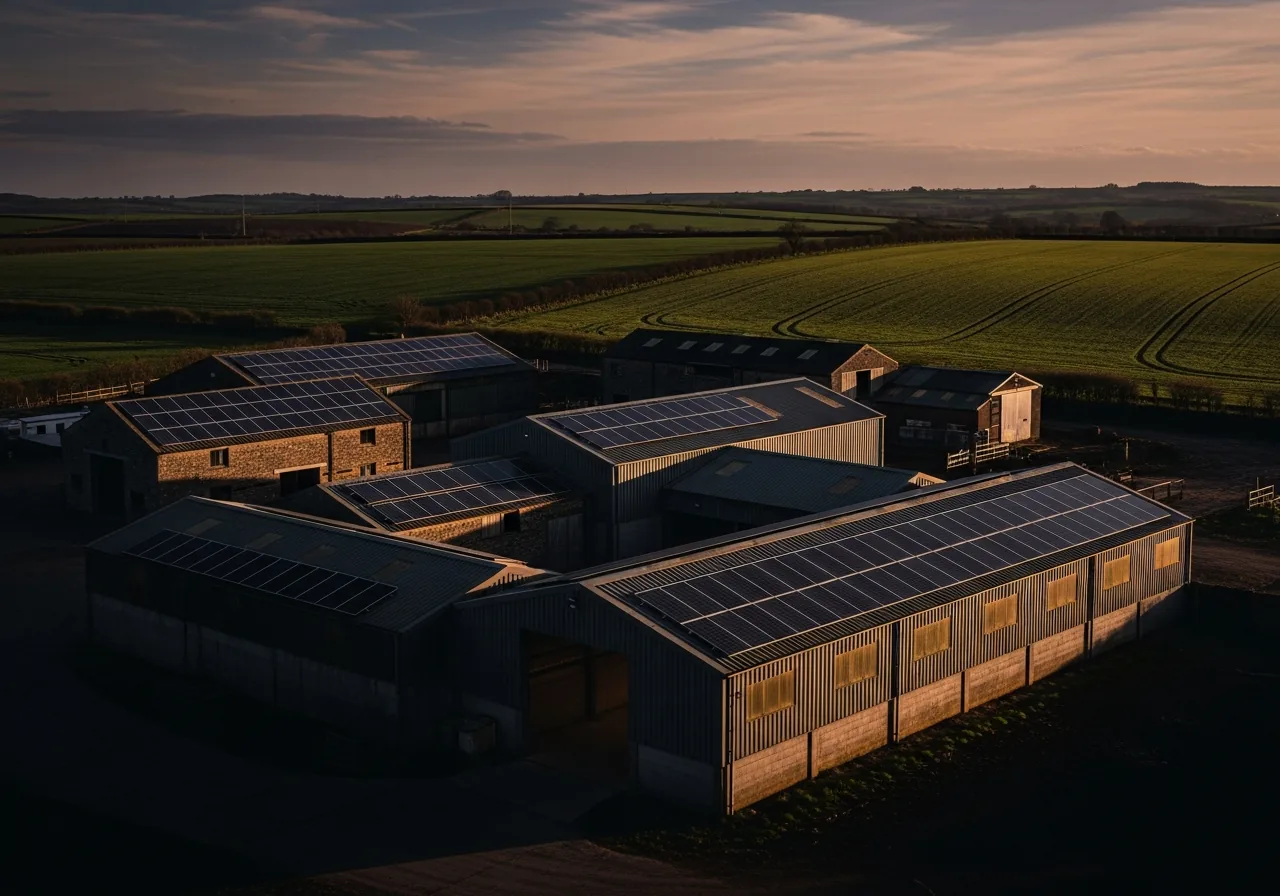
Farms & Rural Estates feasibility checklist
The more of the following we have to hand, the faster and sharper your feasibility study will be — and we can help fill any gaps. Every recommendation that follows is modelled on your data and subject to feasibility.
Common questions
Discuss your Farms & Rural Estates site
Tell us about your site and we'll come back within one business day. Our engineers review your interval data and deliver a no-obligation feasibility study with technology recommendations, financial modelling and payback projections.
Ready to cut energy costs at your Farms & Rural Estates site?
Book a free site assessment. Our engineers will evaluate your load profile and deliver a tailored feasibility study — no obligation.