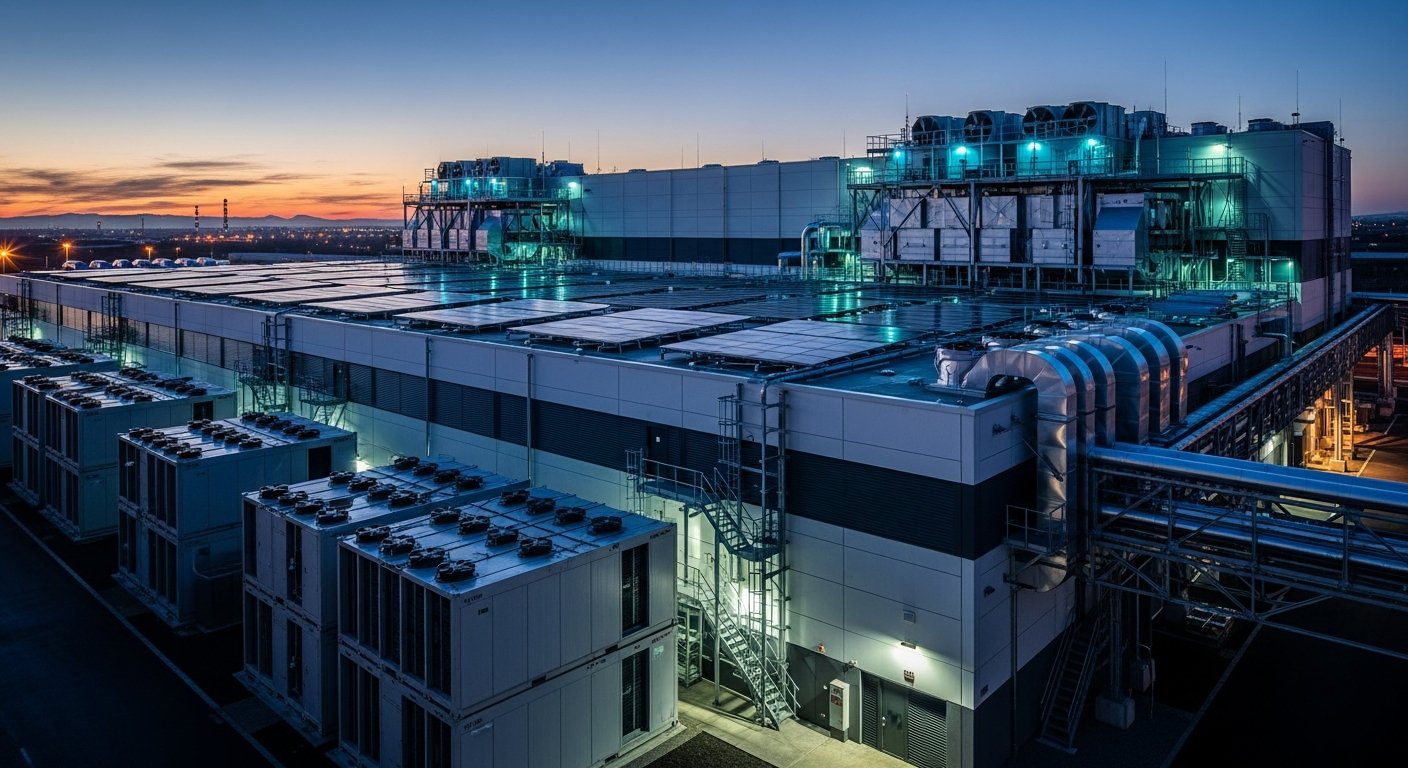
The Client
A 12MW hyperscale data centre in Slough, serving cloud infrastructure for enterprise clients. The facility operates 24/7 with a 1.2 PUE target and a 99.999% uptime SLA. Annual electricity consumption: 105GWh, with a £12.6m energy bill. The site had a 15MVA grid connection, but local grid constraints meant the utility could not guarantee supply during peak periods.
The Challenge
The data centre faced two critical risks: grid instability in the local area (three brownouts in 2024) and rising electricity costs driven by the grid's capacity constraints. The existing diesel generators provided 72 hours of backup, but they were expensive to run (£800/hour in fuel) and the client had a 2030 net-zero commitment.
The site had 8,000m² of flat roof space with a south-east orientation, ideal for solar. The management wanted a solution that would improve resilience, reduce costs, and support the net-zero target — without compromising the 99.999% uptime SLA.
The Skyline Approach
We analysed 12 months of 1-minute interval data from the facility's BMS. The data revealed a critical pattern: the IT load was steady at 10.5MW, but the cooling load varied between 1.5MW and 3.5MW depending on outside air temperature. The peak total demand was 14MW, but only for 6 hours per day during summer afternoons.
- IT load steady at 10.5MW — perfect for baseload solar offset
- Cooling peak of 3.5MW for 6 hrs/day — battery could absorb this
- Grid constraint only during summer afternoons — targeted solution
- BESS + solar hybrid eliminated need for diesel during brief outages
The key insight was that the data centre did not need a full backup system. It needed a system that could handle the grid's brief outages (5–15 minutes) and reduce the cooling load during peak hours. The diesel generators would still handle extended outages, but the battery would eliminate 90% of the generator runtime.
The Solution
1.5MWp Solar Array
Rooftop array on 8,000m² of data centre roof. Generates 1,350MWh/year, offsetting 13% of the IT baseload. The array is connected to the DC bus via rectifiers, reducing AC/DC conversion losses by 3%.
5MWh BESS
Lithium iron phosphate (LFP) battery with 6,000-cycle warranty and N+1 redundancy. Provides 15 minutes of full-load backup for the IT infrastructure, and 45 minutes for cooling. The battery also shaves the cooling peak, reducing grid import by 2.5MW during summer afternoons.
The Results
| Metric | Before | After |
|---|---|---|
| Annual grid consumption | 105,000 MWh | 91,500 MWh (-13%) |
| Peak demand | 14 MW | 11.5 MW (-18%) |
| PUE | 1.45 | 1.37 |
| Generator runtime | 180 hrs/year | 18 hrs/year (-90%) |
| CO₂ emissions | 26,000 tonnes | 22,600 tonnes (-13%) |
The Resilience Impact
The most significant operational change was the reduction in generator runtime. The 5MWh battery handles all brief outages (under 15 minutes), which account for 90% of the grid events. The generators now only start for extended outages, which have not occurred since installation.
During the July 2025 heatwave, when grid demand across the South East hit record levels, the data centre's battery automatically discharged to support the grid (via a demand-response contract). The site earned £12,000 in grid services revenue that week, while maintaining full IT operations.
The Technology-Agnostic Approach
The key to this project was recognising that data centres do not need a full off-grid system. They need a system that handles the 90% of grid events that are brief, and reduces the peak demand that drives capacity charges. The solar array offsets the baseload, the battery handles peaks and brief outages, and the diesel generators remain for the rare extended events.
If you operate a data centre or critical facility with a steady load and grid constraints, a hybrid solar-plus-battery system may be the right answer. We offer free feasibility studies that model your specific load profile and grid risk.